If there were a job as a master connector of various references and linking them, I’d be a strong fit. For some, it may seem far-fetched, while my brain is just finding synchronicities. From concepts to simply seeing items that I forever associate with some people (for example… frogs! My past QA colleague loved the “Feels bad, man” frog memes, and I still think of him when I see a random frog). And, now, I connected… muddied water, Buddhism, and… AI.
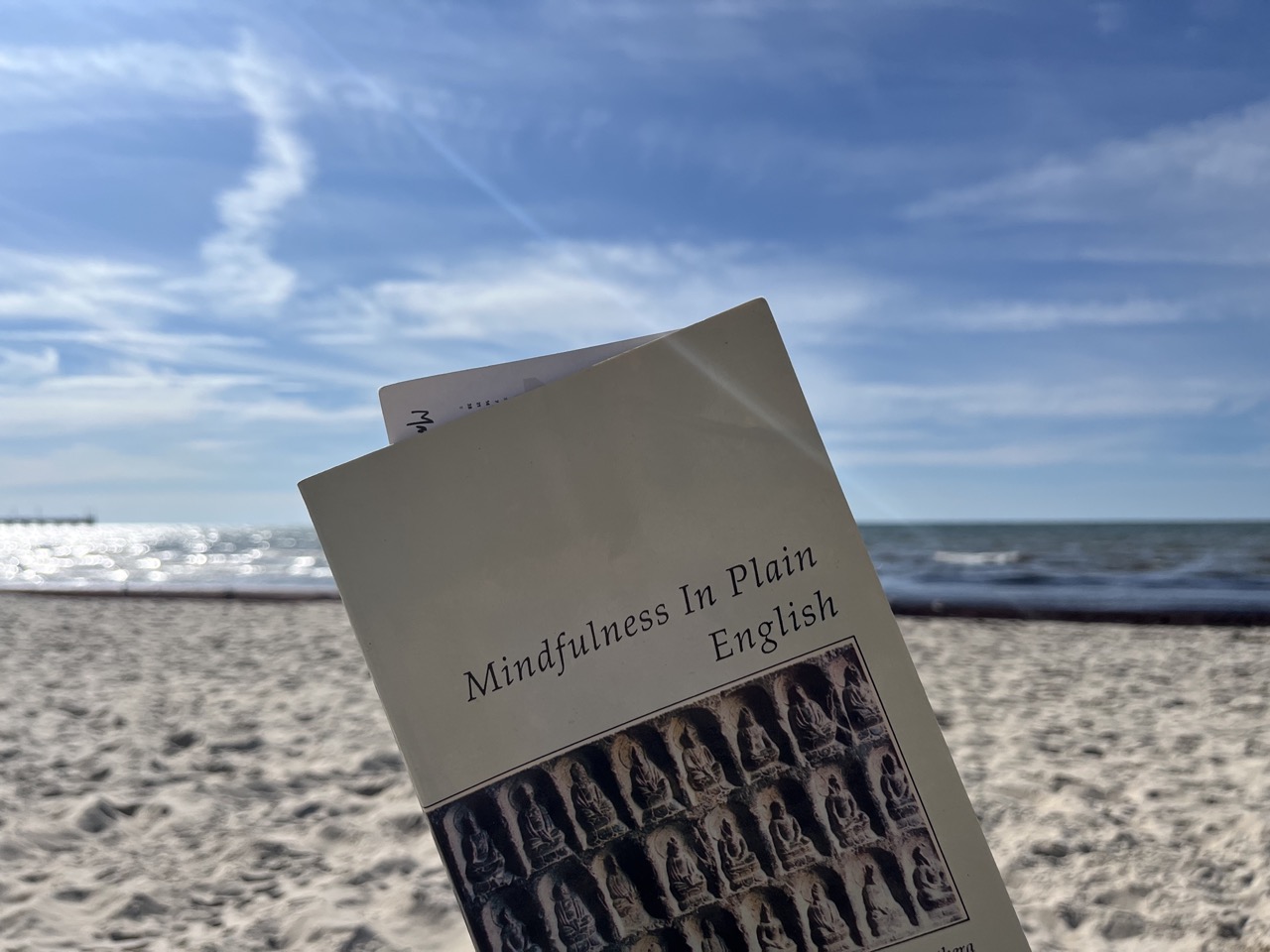 This mindfulness book was a gem that I carried with me everywhere.
QA, AI, and muddied water
For me, being a QA is very much like challenging my inner Marie Kondo (the decluttering queen) of software development. I even had a talk about minimalism and quality where I mentioned her.
I often end up spotting and clearing the messes and bottlenecks. Be it forgotten work items or teammates not talking to each other and working under the wrong assumptions. Now, with AI, it’s still there. Just more of it: longer text summaries, more reports created by individuals finding what matters to them. That’s not necessarily bad; it just needs even more questioning and more skepticism, even if it feels very “professional” and “legit”.
I started to miss imperfect, yet sincere bugs that say “This matters to me because…!!!” rather than a set of curl commands to reproduce it, a statement that it’s a backend bug, and a perfectly worded addition of “The root cause is that this clause uses that…”. It is packaged “professionally”, but it all looks… the same. A lot of the same. I ranted about that to a developer: that it’s even more noise now. More information that gives the perception that it matters. We need to question more and remind people to question those nice-looking tasks.
“Yes… AI muddies the water,” said that developer. I stopped in my tracks. “Muddies the water!” - what a beautiful way to put it. I do like insights like that, as it made me realize how I’ve been fighting windmills, and the rant itself left me a bit run-down.
Interlude on slowing down and the book reaching me
These days, with all that information overload, I feel a strong urge to slow down. Disconnect. Run to a cabin. Read.
I have a bad habit of reading multiple books at the same time, yet recently, I felt like grabbing a new one. I needed something else. So I took a book on mindfulness. A book that has a story itself.
There’s a Sri Lankan QA I have on my team who is… a doctor. An actual medical doctor who, when asked for a fun fact, said that he likes to do surgeries in his free time. A colleague who read that got so surprised that she said, “Oh, I think some of those facts are made up! Like who would be doing surgeries?” I knew who that was.
That QA is also one of the most humble people ever. I remember he was helping out to prep for some event, and it was a curious sight: likely the most educated person on the whole floor, sitting calmly just folding the paper booklets. I sat down and had a short conversation with him on life. Turns out, he’s a Buddhist. I got curious; he noticed that. The next time I visited the office, he gave me a stack of books on Buddhism that he asked a monk he knows in the UK to send for me. And one of the books was “Mindfulness in Plain English” by Venerable H. Gunaratana Mahathera, which I just picked up the other day.
Muddy water & Buddhism
A few days after the “AI muddies the water” conversation, while reading a book, I came across this part:
“Our mind is analogous to a cup of muddy water. The longer you keep a cup of muddy water still, the more the mud settles down and the water will be seen clearly. Similarly, if you keep quiet without moving your body, focusing your entire undivided attention on the subject of your meditation, your mind settles down and begins to experience the bliss of meditation.”
When I read it, I felt such a moment of synchronicity. That was the point I struggled with: to see clearly, we need to slow down, question it, and not stir in even more mud or rush it through. To see value, we need to step back, look at that “muddy water,” and try to see its core. Its value. For what it is.
The balancing act
I could say that I don’t care, or turn a blind eye to the whole thing with this AI situation. Yet I do care. I won’t act as if it doesn’t exist. It’s normal that I may get angry or upset, or even deal with AI with… AI. Buddhism suggests taking reality for what it is without making it worse or brushing things under the carpet. In case we feel like we’re in a trap, it’s a chance to investigate it and see how we can free ourselves. Buddhism doesn’t mean you’re just “zen” about something and passive; it’s about seeing reality as it is. It’s about observing your emotions as they arise, without being controlled by them, and responding wisely.
The fact that AI is muddying the professional waters is currently a reality. It’s also not going anywhere, and it doesn’t have to. However, it’s up to us to see through the mud it adds: let the mud settle, so we can more clearly evaluate whether those comprehensive long pieces of text are what matters or just fluff.